User Research Notes — Desk Research
Sources: LinkedIn job postings, Reddit (r/EDI, r/sysadmin), Stack Overflow, vendor documentation (Cleo, Boomi, Mulesoft), industry blogs, G2 and Capterra reviews for EDI platforms
Job postings (LinkedIn, Indeed)
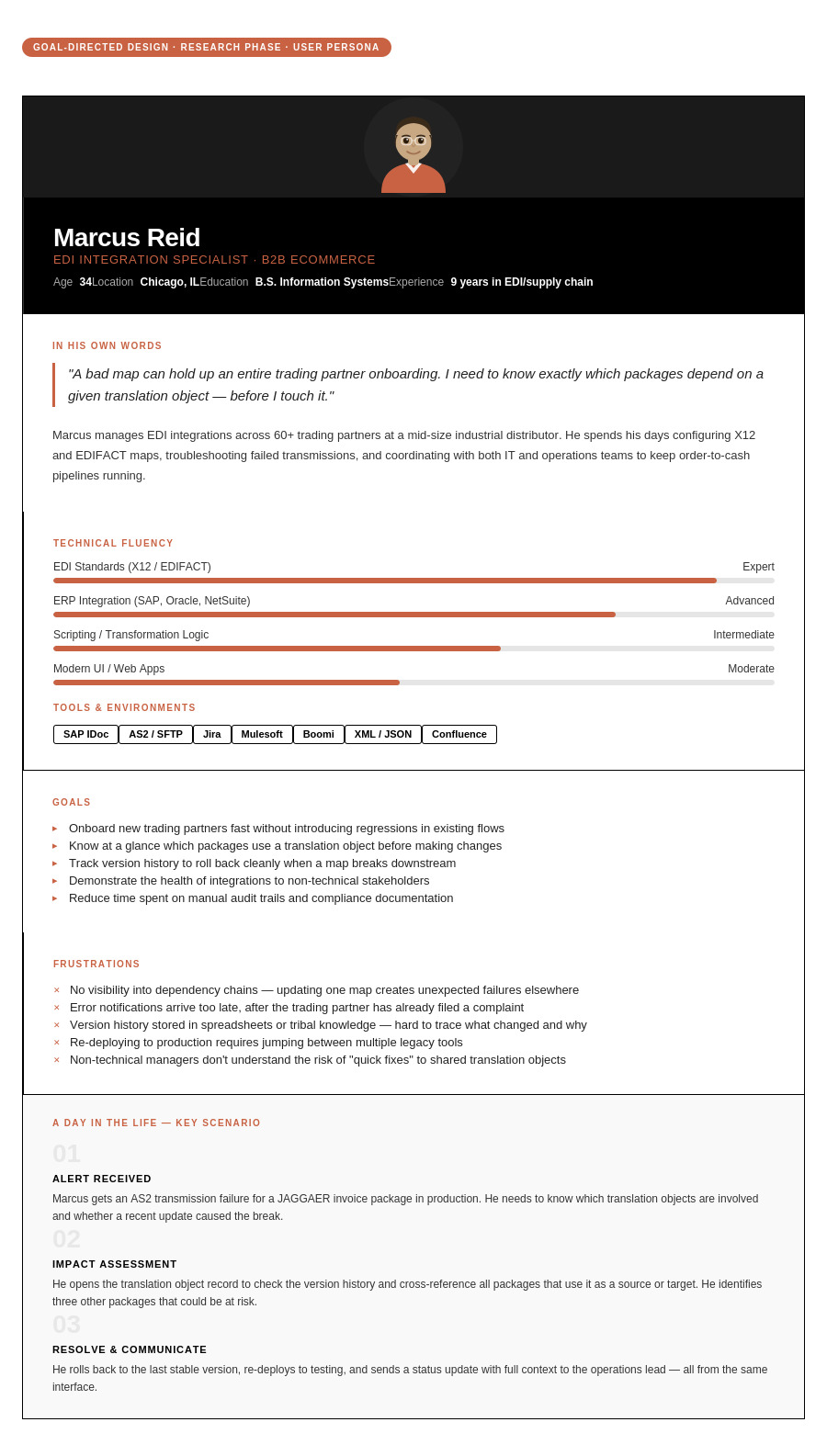
Searched “EDI analyst,” “EDI specialist,” and “EDI integration engineer.” Reviewed ~20 postings to understand role expectations and common tool stacks.
- Titles vary widely: EDI Analyst, EDI Developer, Integration Specialist, B2B Integration Engineer. Often sits within IT or Supply Chain departments.
- Consistently required: X12 and/or EDIFACT standards knowledge, experience with AS2/SFTP transmission protocols, familiarity with at least one ERP (SAP, Oracle, NetSuite).
- Mid-level roles (5-8 years exp.) frequently asked to own the full lifecycle: mapping, testing, partner onboarding, and production support.
- Several postings mentioned “trading partner onboarding” as a primary KPI. Speed to onboard matters to the business.
Reddit (r/EDI, r/sysadmin)
Searched for pain points, tool complaints, and workflow discussions. Most active threads were troubleshooting-focused.
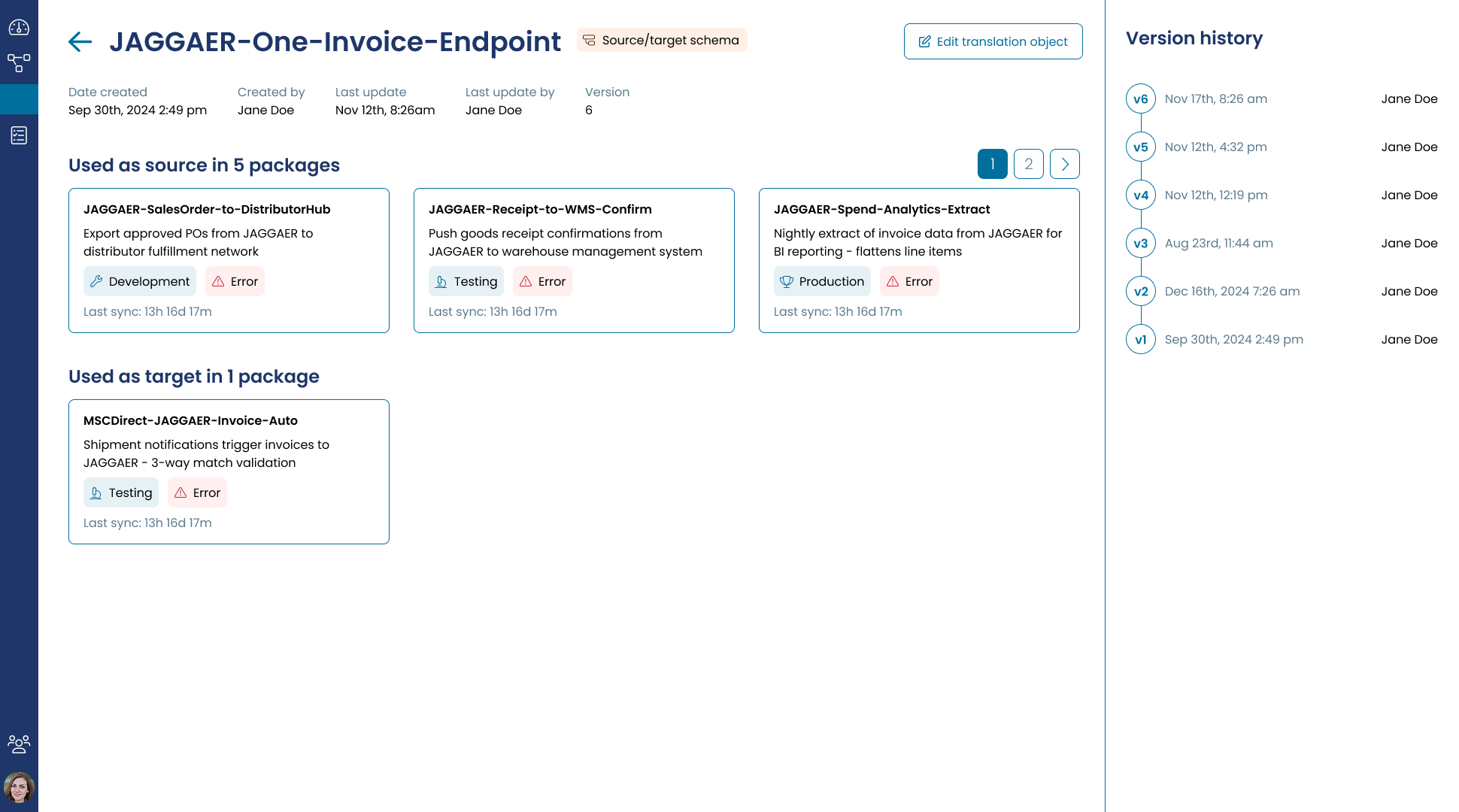
- Common frustration: no easy way to see what downstream processes depend on a given map. Users described manually maintaining spreadsheets to track dependencies.
- Outages are high-stress. Several users described being the sole person on-call for production EDI failures, with direct pressure from operations or sales teams.
- Version control is a persistent problem. Most teams rely on file naming conventions or informal documentation rather than built-in history.
- “I broke three other packages touching one map” came up more than once, in different threads.
G2 / Capterra reviews (Cleo, Boomi, SPS Commerce)
Looked for recurring praise and complaints across 30-40 reviews.
- Positive reviews almost always mentioned reliability and uptime.
- Negative reviews clustered around: poor error messaging, difficulty tracing failures back to a root cause, and steep learning curves for new team members.
- Several reviewers noted that onboarding a new trading partner required touching multiple disconnected tools.
- One review specifically praised a platform for showing “which maps are used where” suggesting this is not a given and is valued when present.
Vendor documentation and marketing copy (Boomi, Mulesoft, Cleo)
Skimmed to understand how vendors frame the user and their needs.
- Vendors consistently emphasize “accelerating partner onboarding” and “reducing integration errors” as headline benefits.
- Documentation assumes a technical user comfortable with schema concepts, but UI design often targets a broader operations audience.
- Suggests a tension between the technical specialist who builds maps and the operations manager who monitors them.
General observations
The EDI specialist role is often a small team or a team of one. They are highly accountable for uptime but rarely have purpose-built tools for dependency tracking, version management, or audit trails. Most workarounds involve spreadsheets, shared drives, or tribal knowledge. The job is reactive by nature and the work becomes visible to the rest of the business only when something breaks.

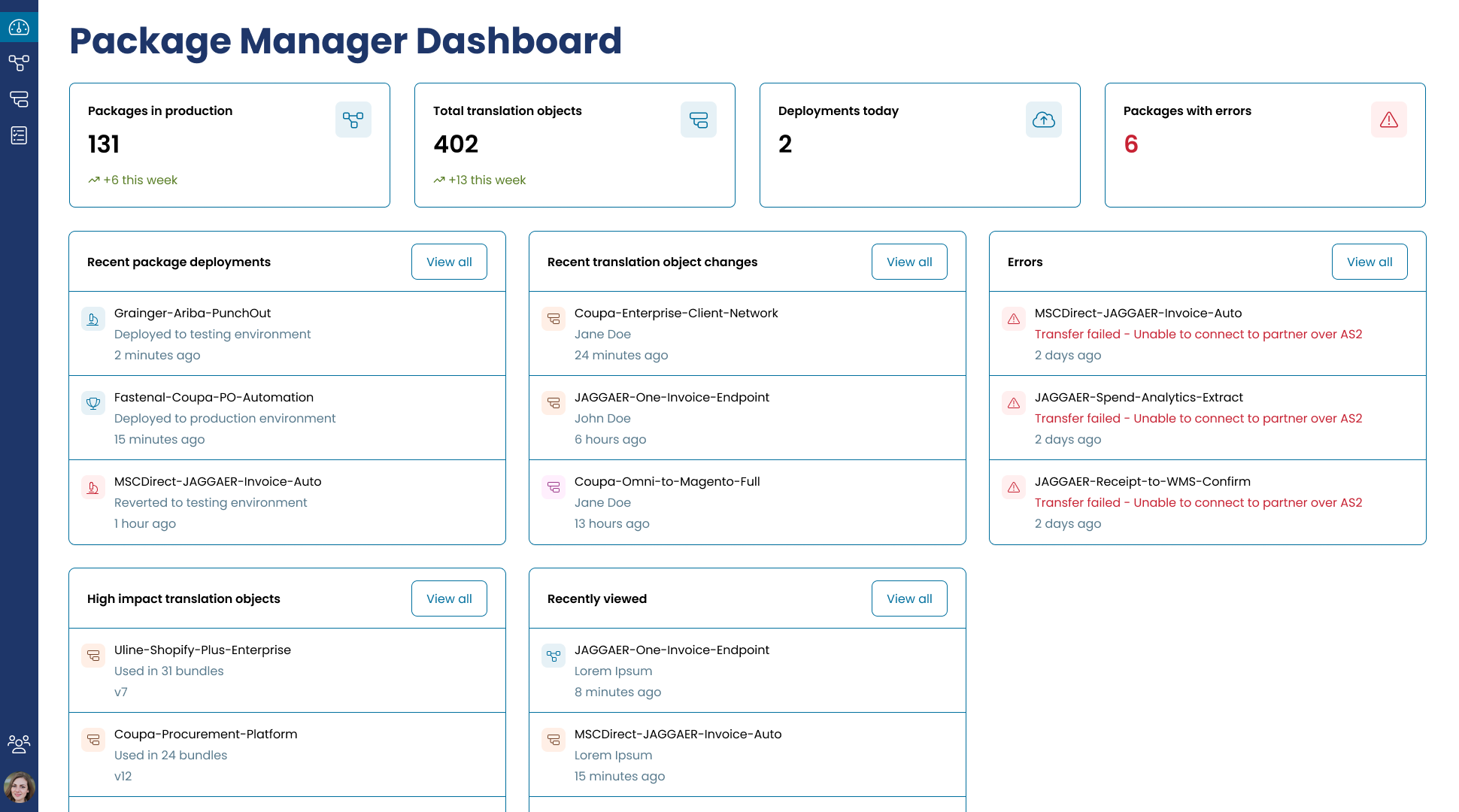
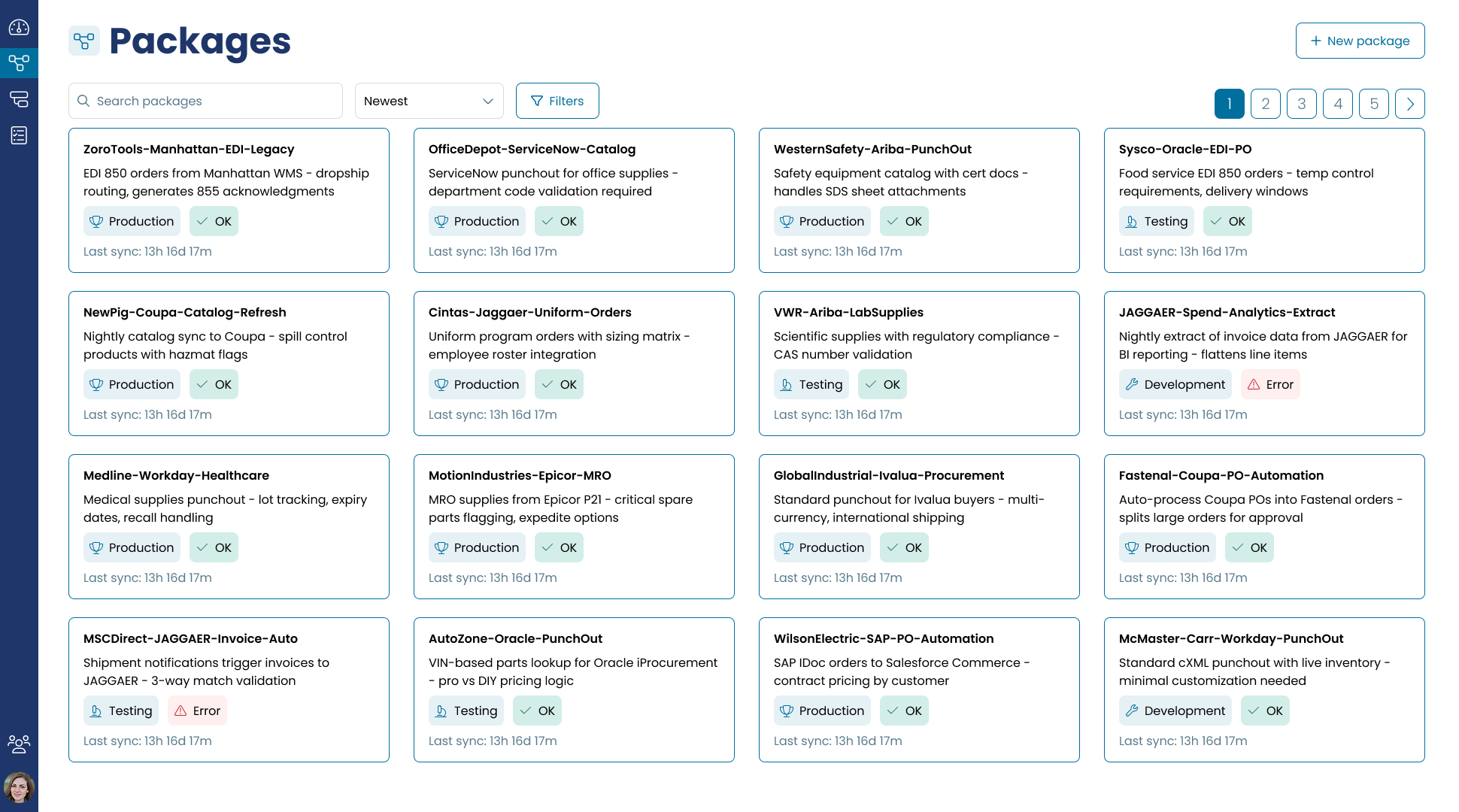
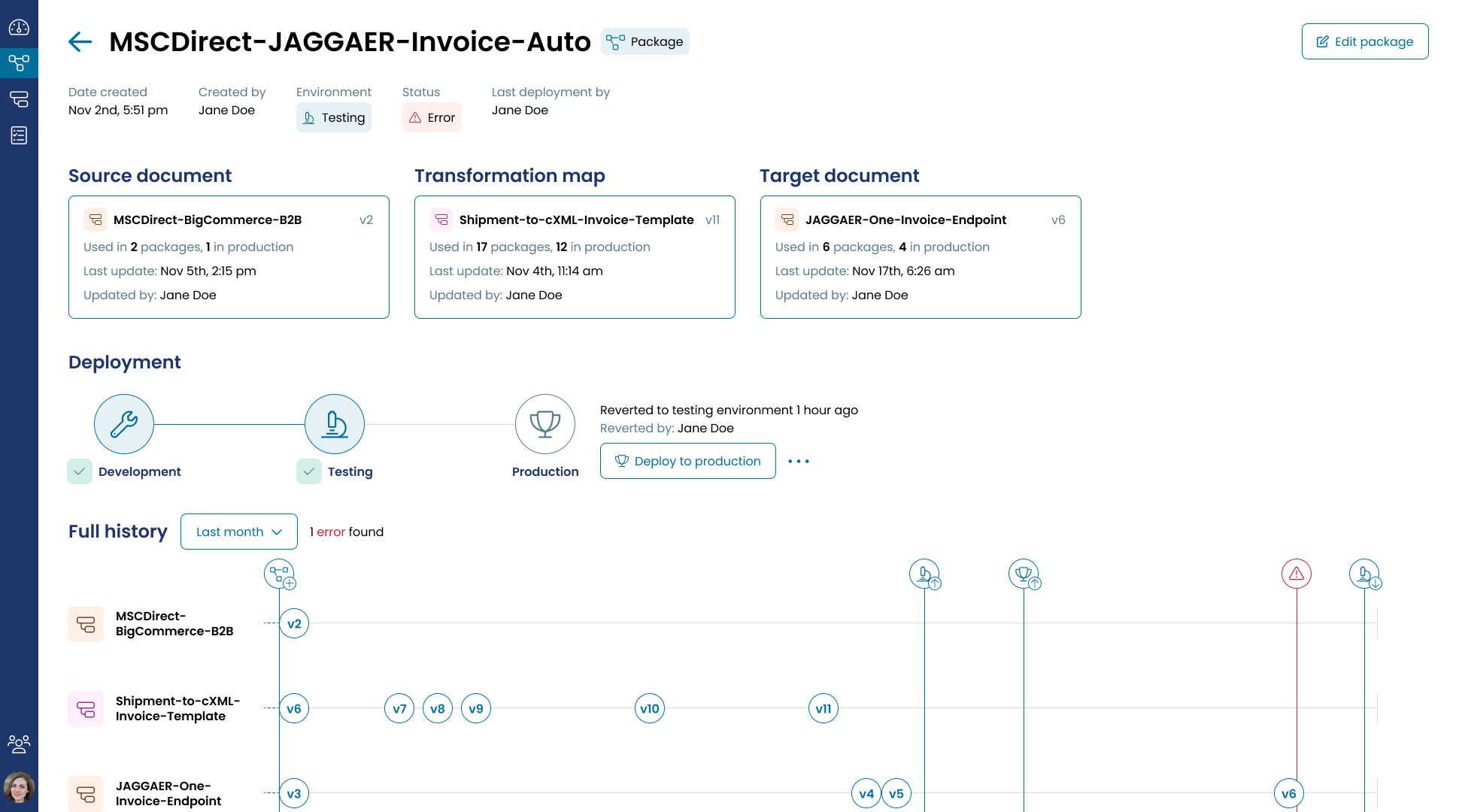

 Hey Figma Make…
 Hey Claude…